A confession
I used to love all-inclusive resorts. For a decade, my partner and I booked at least one a year: the kind with the wristband, the lobby bar, the six restaurants you never quite made it to, and a pool scene straight out of a 1990s spring-break movie. They were easy and predictable, and on the surface they felt like good value.
Then we stayed at Casa Chanty for the first time, and I haven’t booked a resort since.
This isn’t a hit piece. There are great reasons to book a resort, and I’ll get to them. But after four years of private villa rentals in the Riviera Maya, I now find the resort experience genuinely difficult to enjoy. Here’s why, with honest numbers.
The all-inclusive pitch, and the catch
The pitch is simple: one price, everything included. Food, drinks, entertainment, kids’ club, gym, beach access, the daily 4 PM pool volleyball game. The brochure shows a couple in matching white linen, cocktails in hand, gazing at a turquoise sea. It’s aspirational, and it works.
The reality, in my experience, is a slow accumulation of small disappointments. Three buffet restaurants serving variations of the same rice and chicken. Watered-down drinks. A pool packed with two hundred other guests, each defending a lounger with a towel placed at 7 AM. The breakfast rush, the 6 PM queue for the one “good” restaurant, the nightly entertainment that’s exactly as good as the high school talent show.
None of this is catastrophic, and none of it ruins the trip. But the gap between the brochure and the experience, repeated over a week, leaves a residue of mild dissatisfaction I now think of as the all-inclusive tax. You don’t feel it in the moment. You feel it on the flight home, when you realize you can’t quite remember anything that made the trip feel special.
What a private villa actually gives you
Switch to a private villa and the calculus flips. Here’s what changes, in roughly the order I noticed it.
Real privacy
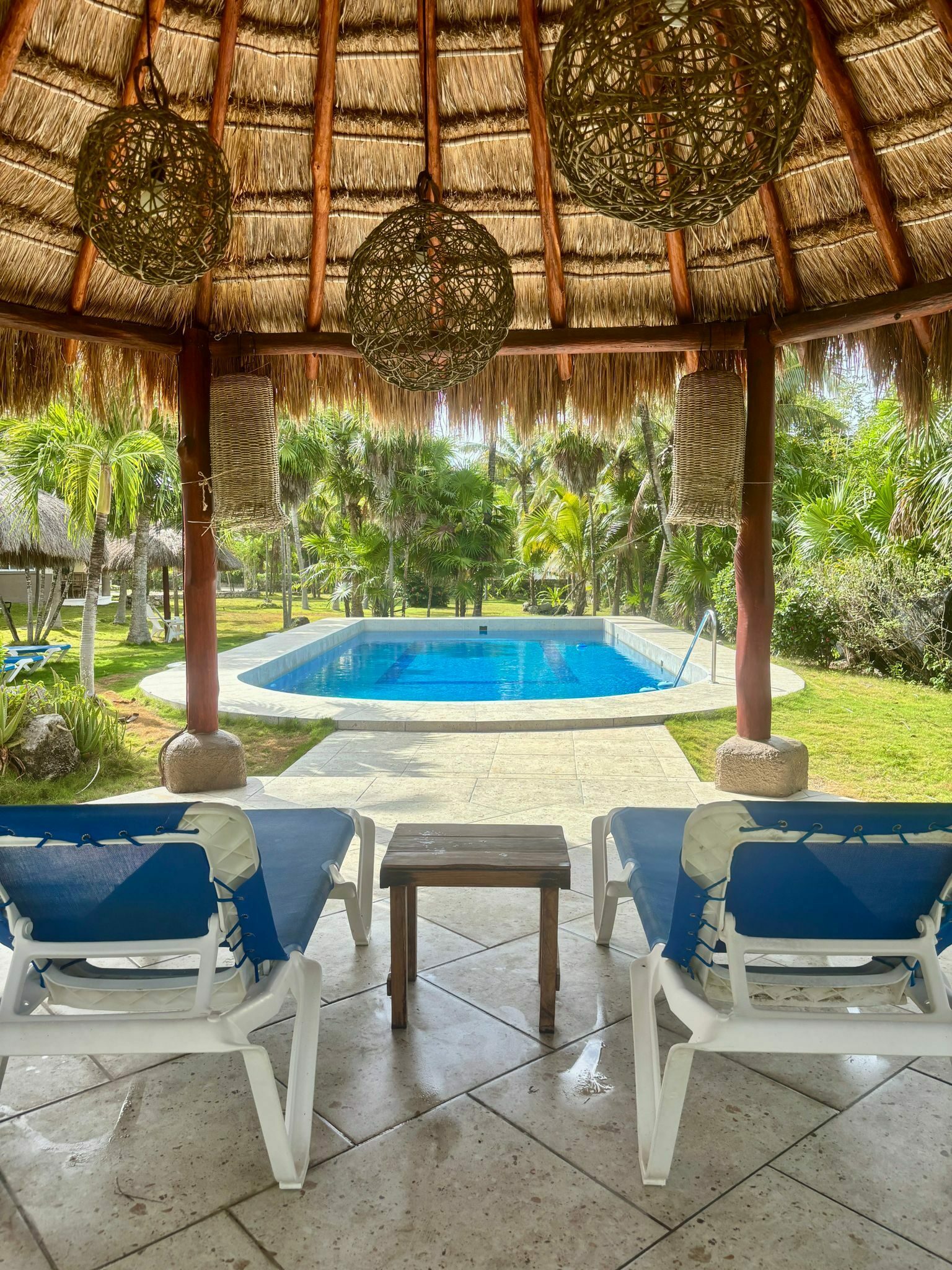
At a resort you’re sharing with hundreds or thousands of other guests. The pool is communal, the beach has the resort’s logo on the loungers, and the buffet is a parade. At a villa, your group is the only group. The pool is yours, the beach is yours, and the morning sounds are the wind in the palms rather than the speaker stack at the aqua-aerobics class. For couples this is a luxury. For families with teenagers it’s the difference between a relaxing holiday and a refereeing job. For groups of friends, it’s the only way to do it.
Space
A resort room is a bed, a bathroom and a balcony in maybe thirty-five square meters. A villa is a home. Casa Chanty’s Sun Suite has a full kitchen, a dining room, a living room, three bedrooms, a wraparound terrace and a private entrance. The Penthouse has four bedrooms, three full bathrooms, a fully equipped kitchen and a spectacular view over an almost deserted beach. No hallway traffic, no slamming doors, no luggage Tetris.
A real kitchen
This is the under-appreciated one. A real kitchen changes how you eat on holiday. You can have breakfast when and where you want, the kids can have snacks, and the morning coffee is actual coffee, not a packet from the buffet. If you book ahead, our chef Beto will arrange a grocery shop before you arrive, and the cost of feeding a family of four for a week is roughly what you’d pay in surcharges and tips at a resort.
Food, when you want it
When you don’t want to cook, Casa Chanty’s private chef service is the move. Available on request with at least 24 hours’ advance notice, the chef comes from Playa del Carmen and prepares a multi-course dinner of Yucatán and Mediterranean flavors built around fresh local ingredients. See our dining guide for details.
The beach, as it should be
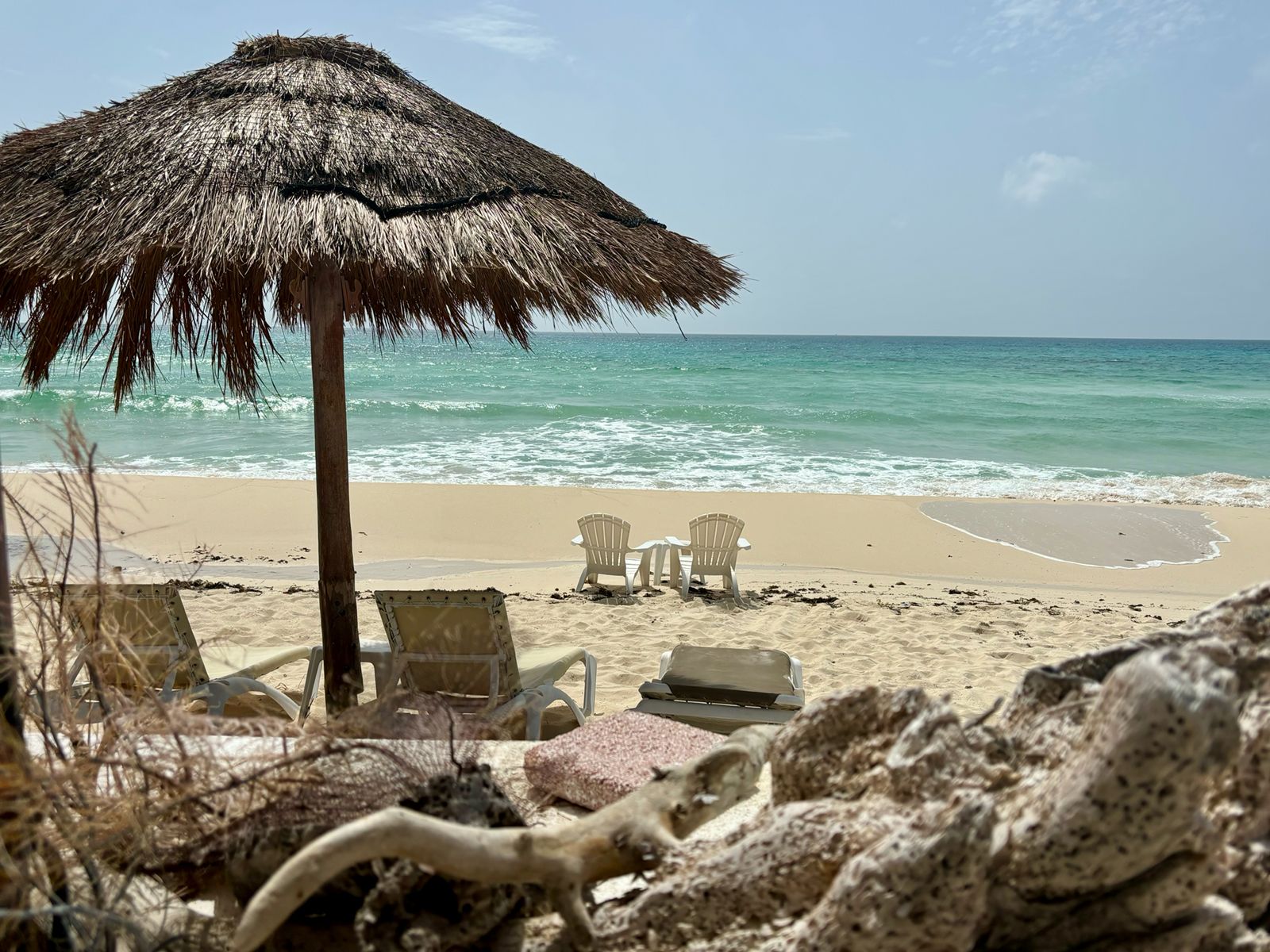
The resort beach is a managed experience: loungers, umbrellas, beach waiters. A villa beach is what the brochures actually showed. At Casa Chanty the sand is in front of you, the water is in front of you, and the nearest other person is in the next villa down the beach.
The cost comparison: honest numbers
The all-inclusive pitch implies the alternative is expensive. It usually isn’t, once you run the numbers honestly. Here is a worked example for a week in the Riviera Maya (figures are indicative and vary by season).
Resort: two adults, 7 nights
A mid-range all-inclusive (think Dreams, Iberostar and similar) runs $350–450 per night for a standard room in high season: about $2,450–3,150 for the week. Add an airport transfer (around $80 each way), tips ($100 or more over the week, since you tip the bartender, the waiter, housekeeping and the pool attendant), and one or two off-resort excursions ($200–400), and you’re at roughly $2,900–3,800 before you’ve bought sunscreen.
Villa: the Sun Suite, 7 nights
The same dates at Casa Chanty’s Sun Suite, which hosts up to 8 adults, run $2,600–3,200 depending on the week. That includes a full kitchen, a private terrace, beach access, a private pool, housekeeping and a concierge. Add a private airport transfer ($120 round trip), one grocery shop ($150 for a week of breakfasts, lunches and snacks) and one chef dinner for two ($160), and two adults are at roughly $3,000–3,600. The villa is comparable in price and includes things the resort charges extra for, and the per-person cost falls fast as you add guests.
Now run the numbers for a group of eight
Eight adults at a mid-range resort need four rooms. At $350–450 per room that’s $1,400–1,800 per night, or about $9,800–12,600 for the week before extras. Eight adults at Casa Chanty, taking the entire property, pay $3,600–3,800 for the week. The math swings harder the bigger the group gets, and it’s the main reason multi-generational trips and friend reunions have quietly moved from resorts to villas over the last decade.
Who should still book a resort
Not every traveler is the same, and resorts still win for:
- First-time visitors who want everything handled, don’t speak Spanish, and don’t want to think about logistics for seven days.
- Honeymooners who want pure relaxation, poolside spa services and the romance of being waited on.
- Families with very young children who will spend every waking hour in the kids’ club and water park anyway. (For older kids and teens, I’d argue the villa is better.)
- People who want to be social and meet other travelers. The villa is a quieter, more inward-facing experience.
The verdict
If you value quiet, good food, space and the freedom to set your own schedule, the villa wins, and it’s not close. The all-inclusive pitch is built on convenience, but the convenience comes with small compromises that add up, over a week, to a less relaxing holiday than the one you imagined.
Casa Chanty is a particularly good example of why. The layout, with three separate residences in one villa, gives you the privacy of an apartment and the togetherness of a shared house. The location, on a quiet stretch of beach with no crowds and no sargassum-flag swim zones, means the beach experience is the real thing. And the team (Alberto, Cristina and Damian, our private chef Beto, and Juan the driver) gives you the concierge service of a resort, with a personal touch you don’t get from a uniformed staff.
It’s not for everyone. Nothing is. But for me, and for a growing number of travelers I know, the switch was permanent. I haven’t booked a resort in four years, and I doubt I’ll book one again.
No responses yet