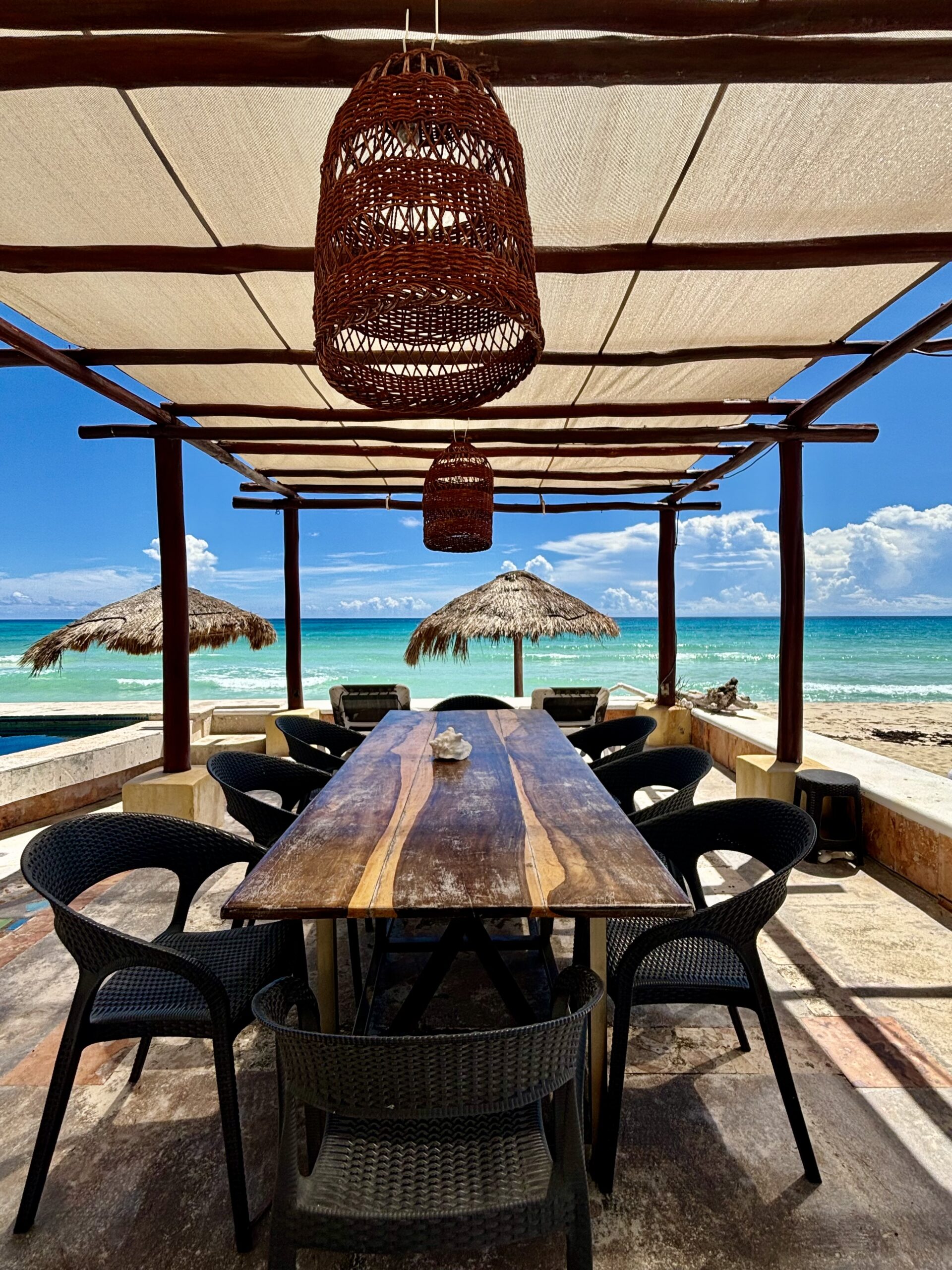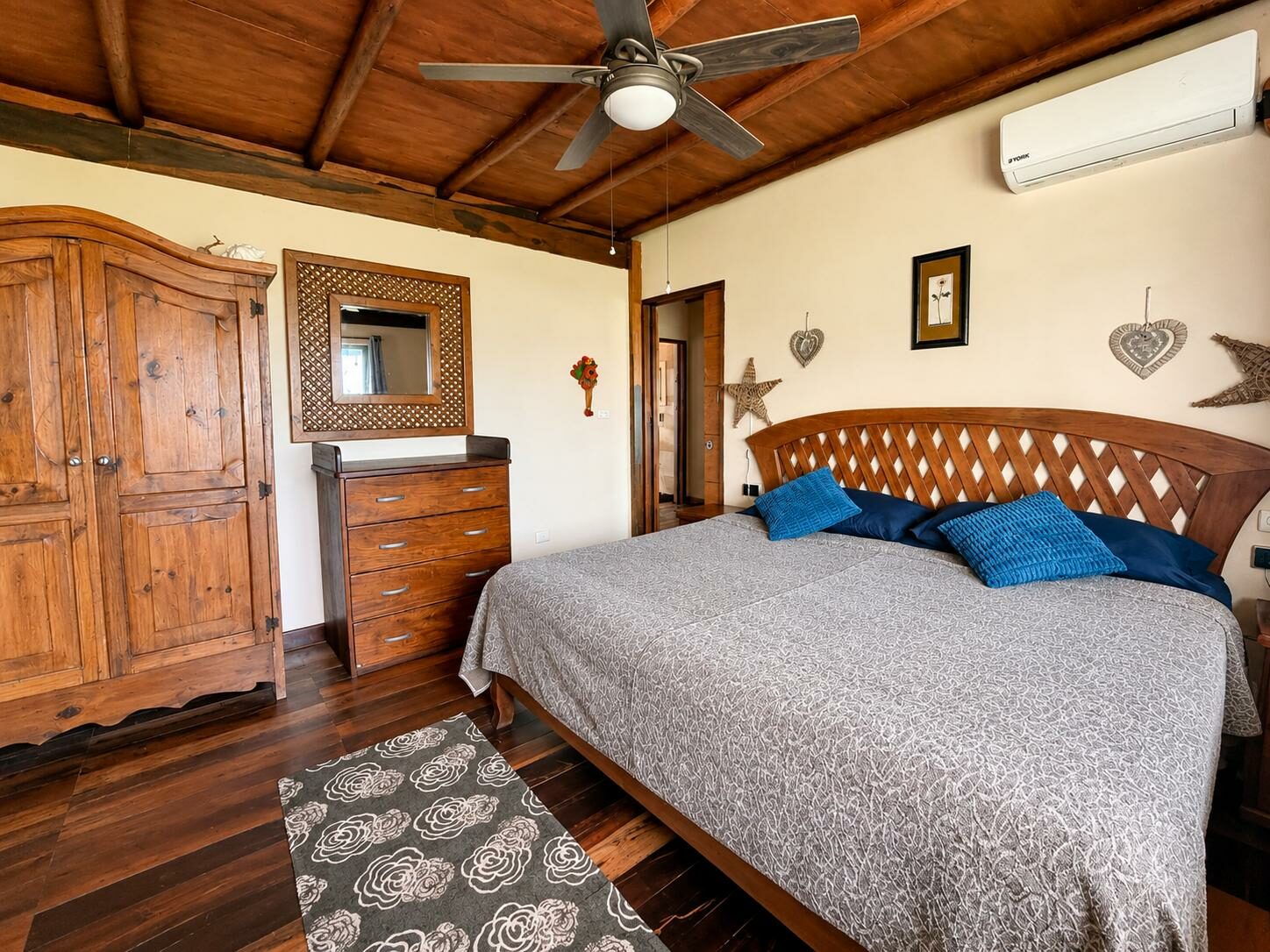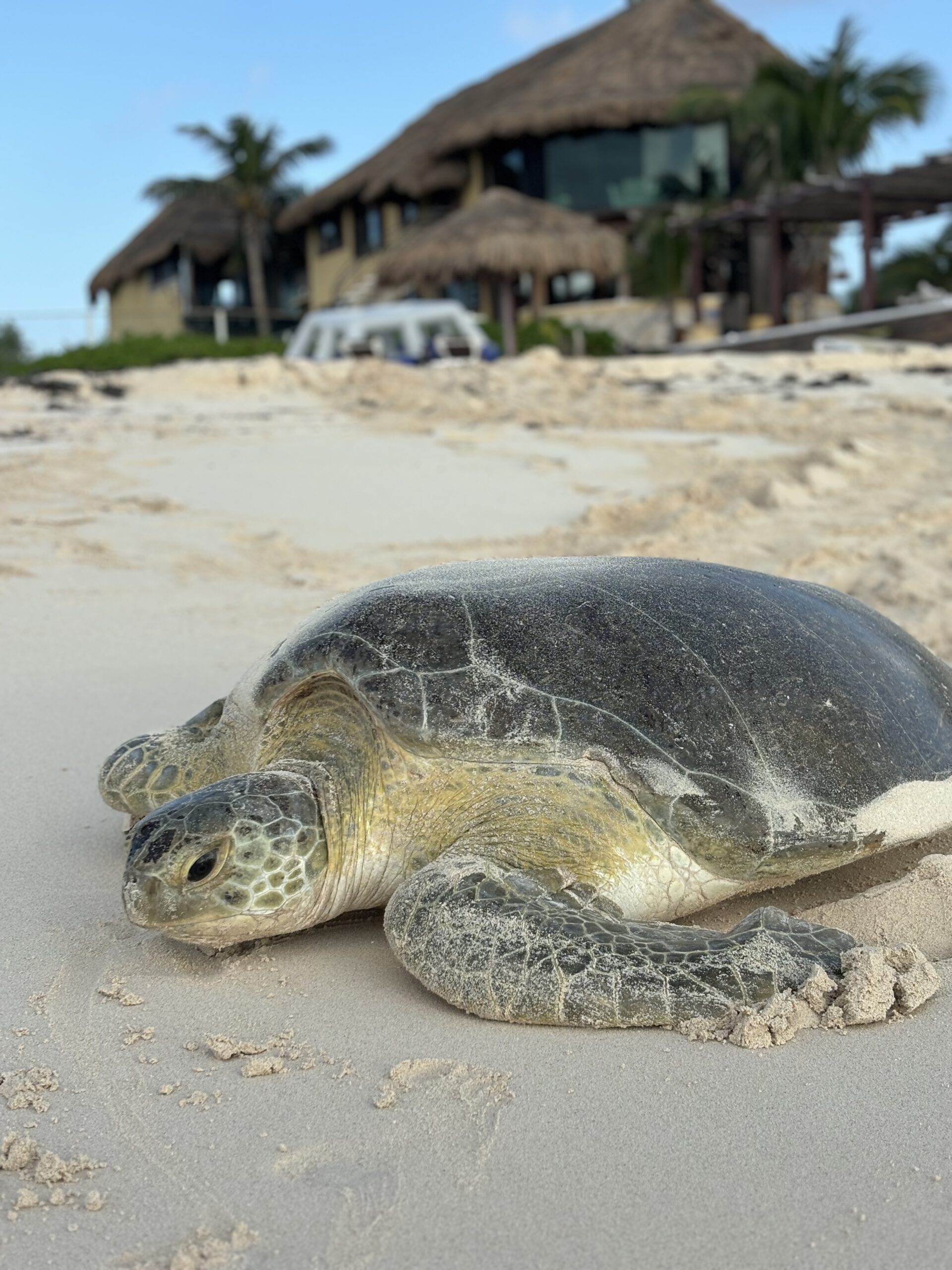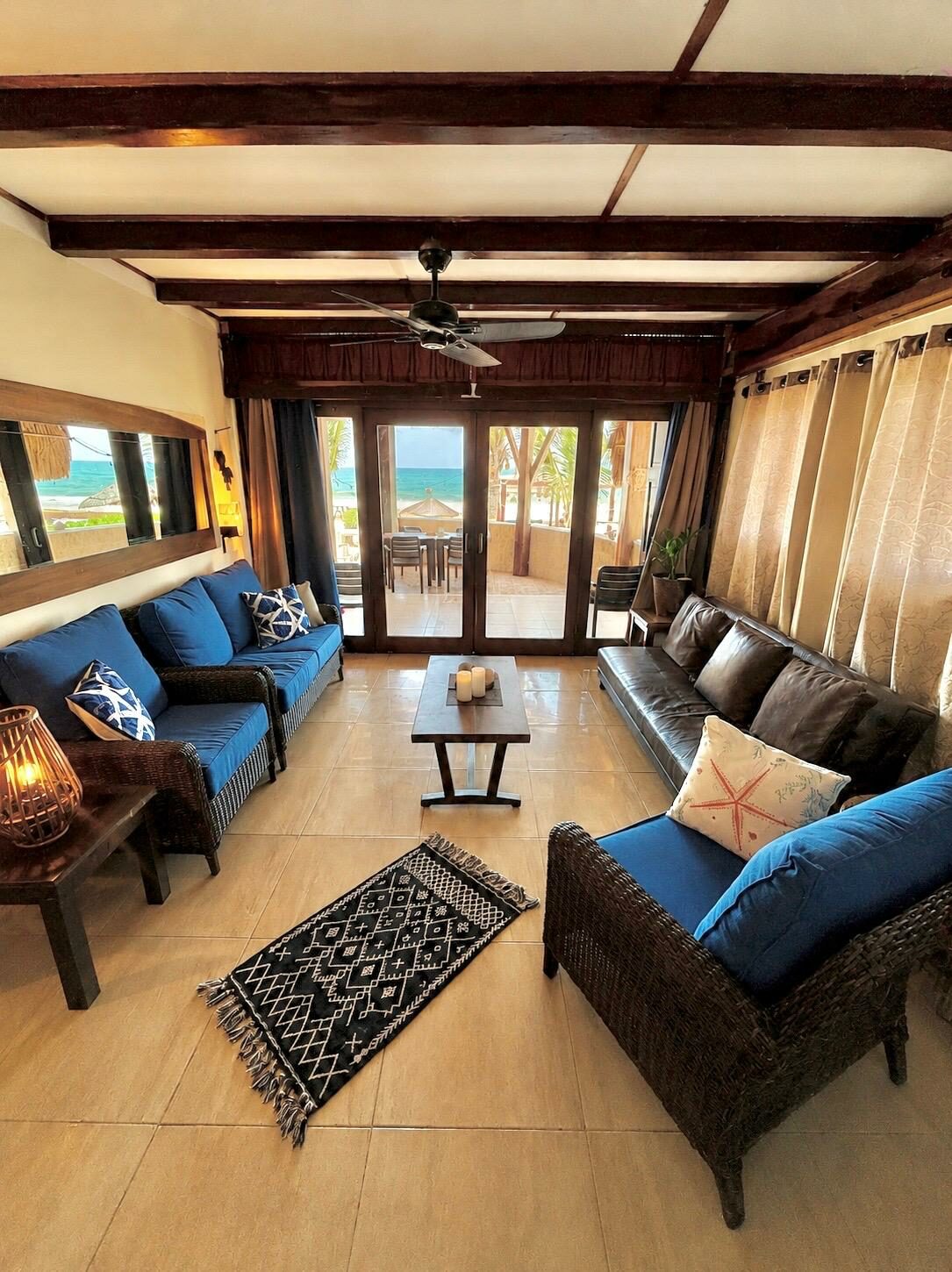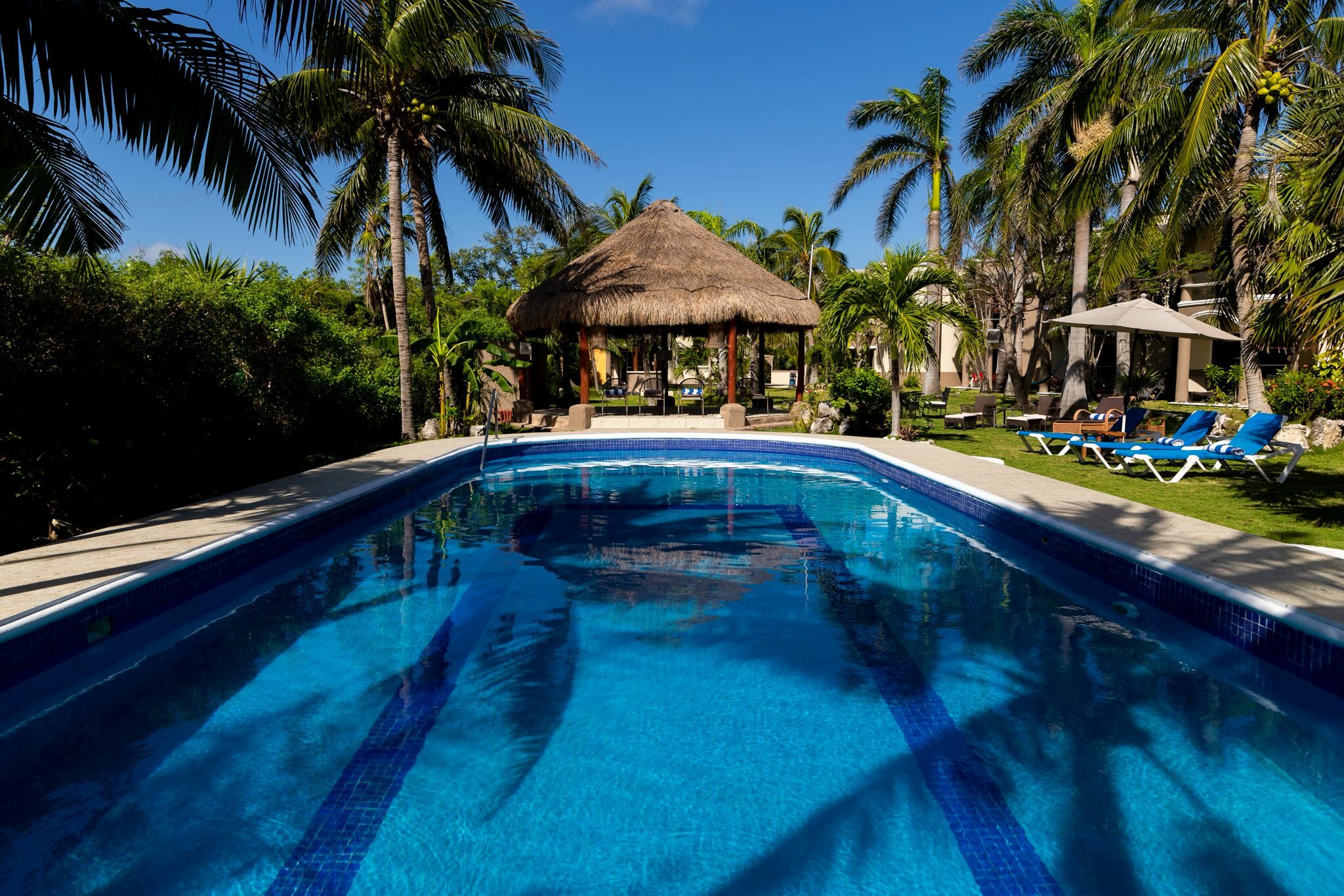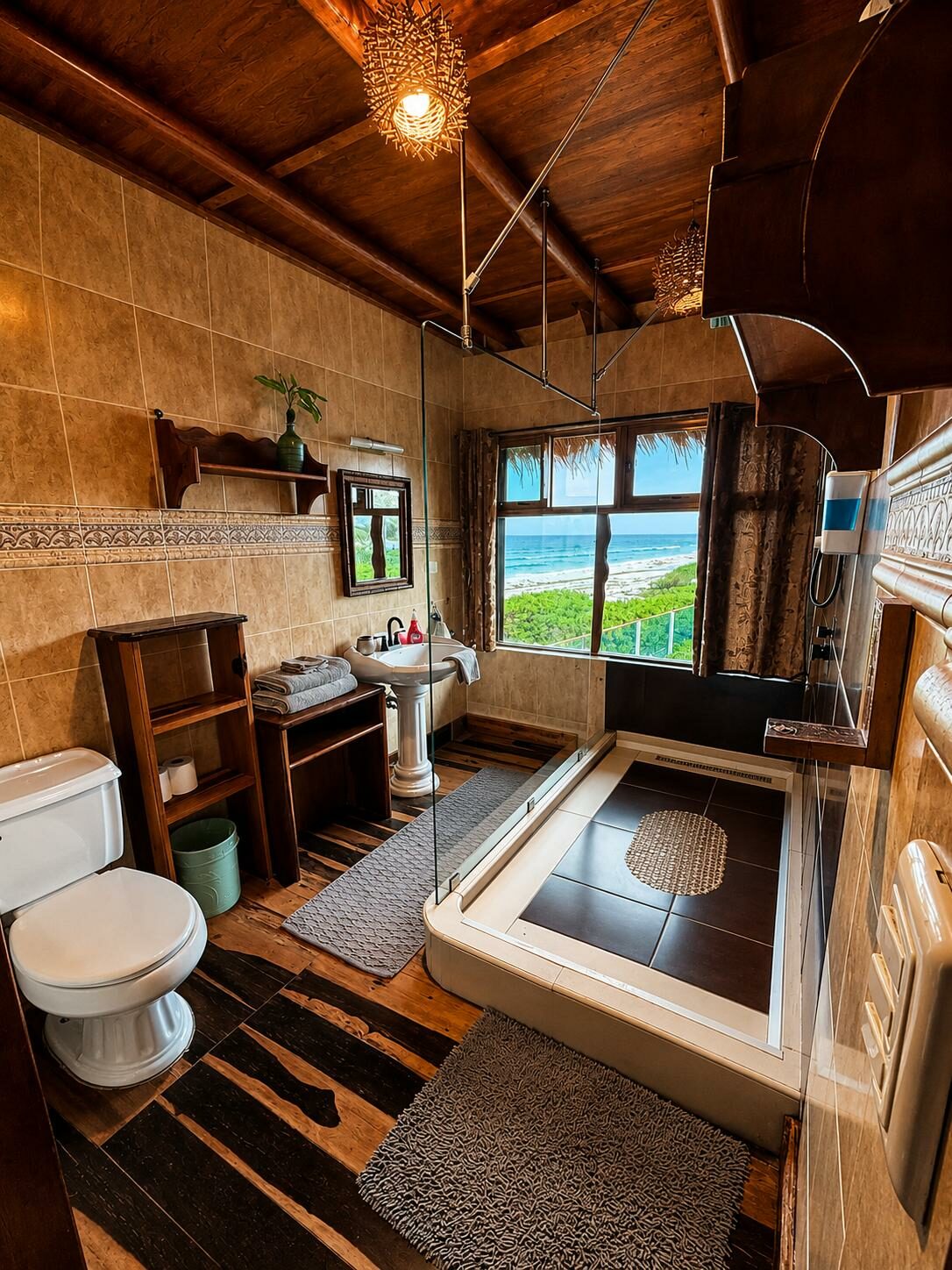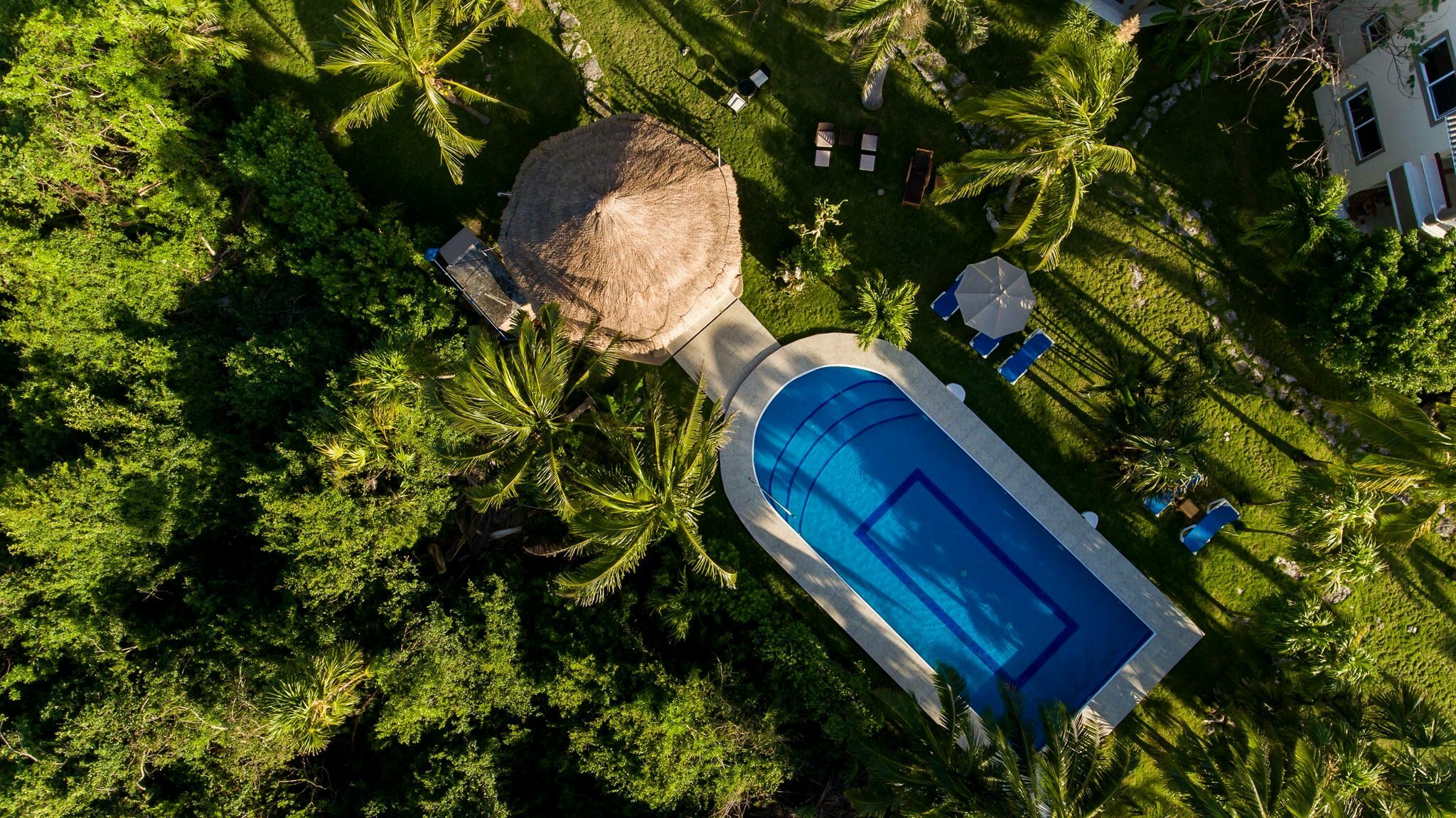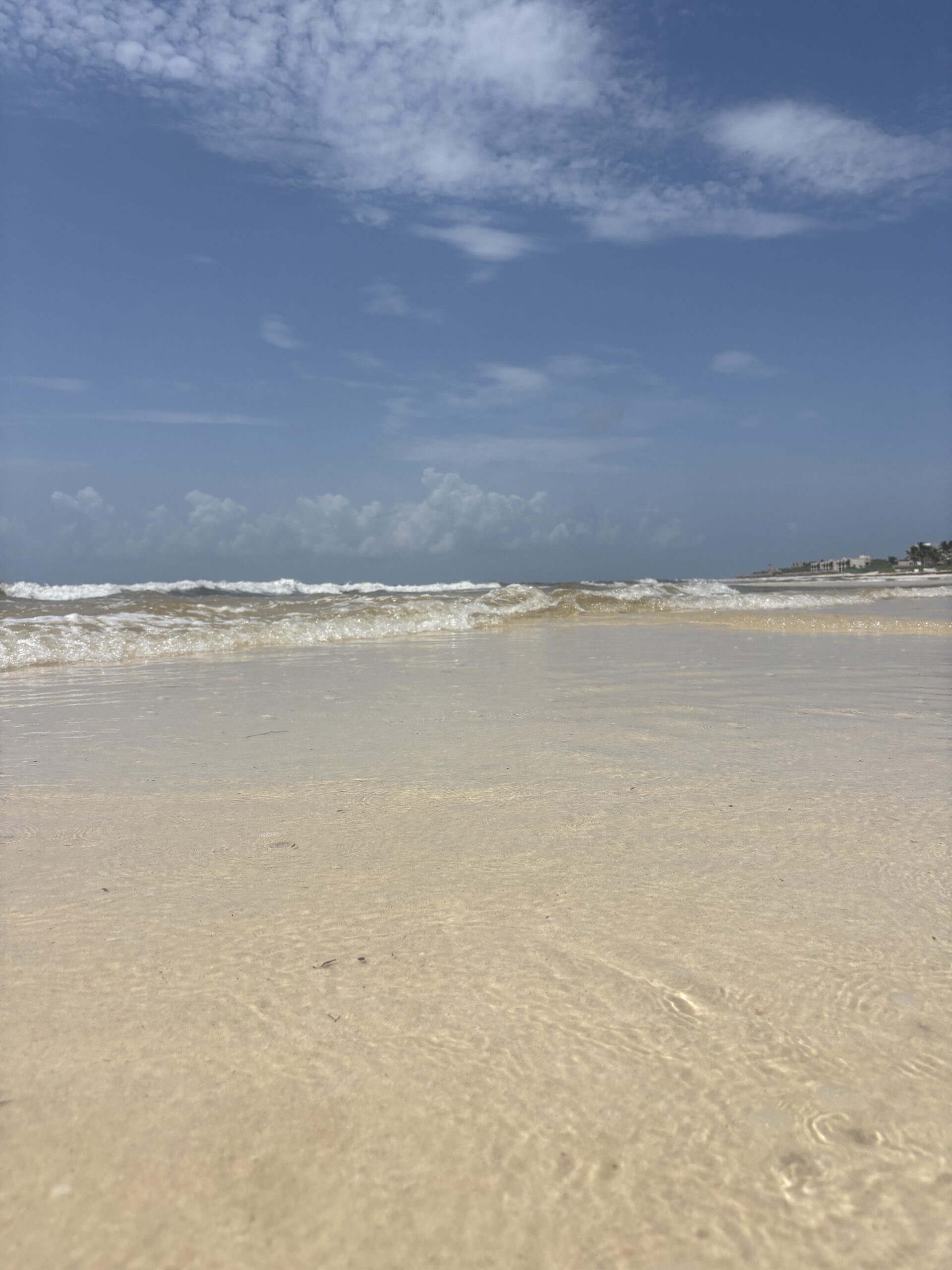
The Riviera Maya has no shortage of beachfront resorts — but if you’re looking for something that doesn’t feel like a resort, Playa del Secreto is still one of the last quiet pockets of the coast. Tucked between Puerto Morelos and Playa del Carmen, the “Secret Beach” lives up to its name: white sand, gentle surf, and almost no foot traffic.
We built Casa Chanty specifically for travelers who want that. Here are five reasons it works.
1. The beach is literally your front yard.
A private gate opens straight from the property onto the sand. No crossing a road, no fighting for a lounger.
2. The Penthouse has a 180° glass wall.
The entire living room faces the Caribbean. You can watch the sunrise from the kitchen.
3. You’re 20 minutes from the cenotes.
Hidden cenotes like Cenote Verde Lucero and Cenote Mojarras are a short drive. We’ll send you with directions.
4. Housekeeping three times a week.
The Penthouse and Casa Angelica include housekeeping, bottled water, and beach towels. No resort fees.
5. It’s family-run, not corporate.
The owners live on the property. Chef Beto has cooked for the family for two decades.
What does a typical day at Casa Chanty actually look like? Here’s a rough sketch of how our guests tend to spend their time — no two days are the same, but there’s a rhythm.
7:00 AM
Coffee on the terrace. The sun rises over the water; the beach is empty. This is when the property is most magical.
8:30 AM
Breakfast. Most guests either cook in their full kitchen or have our chef prepare something simple. Fresh fruit, eggs, strong coffee.
10:00 AM
Beach. The water is calm, the sand is white. Read, swim, snorkel, do nothing. The reef is close enough to spot from shore.
1:00 PM
Lunch. Walk to one of the small beachside restaurants in the area, or have something light back at the villa. Ceviche, tacos, cold drinks.
3:00 PM
Siesta. Most of our guests are off the beach by 3 — the sun is strong. Air conditioning, a hammock, a book.
5:30 PM
A cenote, a quick snorkel, or a walk down the beach. Some guests head to Playa del Carmen for shopping; others stay put.
7:30 PM
Sunset from the terrace. Cocktails. Chef-prepared dinner on request (a few days’ notice is plenty). Sleep with the windows open and the sound of the sea.
The Riviera Maya sits on top of one of the largest underground river systems in the world, and cenotes (natural sinkholes filled with crystalline groundwater) are everywhere along the coast. Most visitors don’t realize how many are within a 30-minute drive of Playa del Secreto.
Here are our favorites, ordered by distance.
Cenote Mojarras (10 min)
A wide, open-air cenote with wooden platforms for jumping. Great for first-timers; the water is cool but not cold, and the limestone shelf around the edge is perfect for sunbathing. Crowded on weekends; weekdays are much better.
Cenote Verde Lucero (15 min)
Deeper and more dramatic, with a partially enclosed cavern. Snorkelers love the visibility; the stalactites just below the surface are surreal.
Cenote Siete Bocas (25 min)
A series of seven connected cenotes; you can swim through tunnels between them with a guide. More adventurous; not for very young kids.
Cenote Chac Mool (30 min)
A bit farther but worth it. Open sinkhole with deep, dark water and a platform 6 meters up for the brave. Famous for cave divers.
A few tips: bring water shoes (the limestone is sharp), avoid sunscreen right before swimming (most cenotes ask you to shower first), and arrive before 11 AM for the best light and the fewest crowds.
Chef Beto has been cooking in the Riviera Maya for over twenty years. He started in the kitchens of small family restaurants in Puerto Morelos, moved through the kitchens of two of the region’s first boutique hotels, and joined Casa Chanty when the property opened.
His cooking is straightforward and deeply local: yucatecan recados, freshly caught fish, slow-cooked pork, and whatever’s in season from the market that morning. He doesn’t do molecular gastronomy, fusion, or anything that requires a foam canister.
What he does do is make you feel like you’re eating at a friend’s house. The catch of the day might come back as a whole snapper grilled over hardwood, served with a salad of jicama, orange, and chiles that his mother taught him to make. The cochinita pibil is marinated for three days. The salsas are made to order.
Chef Beto cooks for guests at Casa Chanty a few nights a week. Dinner is served on the terrace; you choose the menu with him a day or two in advance. The wine pairing is optional but recommended — he’s worked with a small sommelier in Playa del Carmen for years.
If you’re staying for a week, ask him about his Saturday cooking class. Small group, no more than six, in the kitchen of the main house. He’ll teach you the recado paste from scratch, then you’ll eat what you made.
Why Playa del Secreto is the Riviera Maya’s best-kept secret
Drive south from the chaos of Cancún International Airport and within twenty-five minutes the coastline changes. The high-rise hotels thin out. The cruise-ship crowds disappear. The highway narrows to two lanes, and the scrub jungle presses in from both sides. You’re approaching a stretch of coast the brochures don’t really cover, and the people who live here like it that way.
Playa del Secreto — literally “Secret Beach” — is the quiet middle child of the Riviera Maya. Tucked between the fishing town of Puerto Morelos and the bustle of Playa del Carmen, it covers maybe two kilometres of white sand and a few hundred homes. There’s no commercial centre. No tour-bus drop-off point. No pedestrian boulevard. What there is, in spades, is solitude: the kind of silence that gets rarer every year on the Caribbean coast of Mexico.
I first stumbled on Playa del Secreto a decade ago, when a friend with a timeshare dragged me down for a long weekend. We expected the same Cancún-Maya-Riviera conveyor belt — the buffet lines, the wristbands, the captive-tour excursions. What we found was a beach so empty we could walk for an hour without seeing another person. The water was that impossible shade of turquoise the postcards promise. The sand was powder-fine. And the only sound was the wind in the palms and the slow, rhythmic wash of small waves.
I’ve been coming back ever since.
How to actually get to Playa del Secreto
The first thing to know is that the entrance is unremarkable. There’s no big sign announcing “Welcome to Playa del Secreto” — just a small side road off the Carretera 307 (the main highway that runs the length of the Riviera Maya). If you’re driving from Cancún airport, head south on 307 for about twenty-five minutes; from Playa del Carmen, head north for fifteen. Watch for the kilometre markers and the small “Acceso a la Playa” signs that the residents put up themselves.
Pro tip: download offline Google Maps before you leave the airport. Cell service is patchy in this stretch, and the turns come up fast. The turn-off for Casa Chanty and most of the villas is a few hundred metres past the Puerto Morelos exit.
If you’re not renting a car — and many visitors don’t — most Casa Chanty guests arrange an airport transfer with Juan, a local driver who’s been doing the route for years. He charges around $60 USD for the one-way trip and will have you at the villa in under thirty minutes, even with luggage. He’ll also hand you a bottle of cold water and, if you’re lucky, a quick Spanish lesson for the week ahead. It’s the small things.
What to do once you arrive
Honestly? Nothing. And that’s the point.
Playa del Secreto is a place for doing less, not more. The villa is your base. The beach is your office. The rhythm of the day is sunrise coffee on the terrace, a long breakfast, a swim in the sea or the pool, a siesta in the hammock, a long lunch, an afternoon book, a sunset walk on the sand, a dinner cooked by Chef Beto (or by you, if you’re the cooking sort), and an early bed. Repeat for a week. You’ll return home a different person.
For the active, the calm turquoise water is ideal for paddleboarding and kayaking — both available at most of the beachfront villas. The reef runs about two hundred metres offshore, and even beginners can snorkel it on a calm day: parrotfish, sergeant majors, the occasional stingray gliding by like a shadow. Bring your own mask and snorkel if you have them, though the villa will usually have a few sets in the beach kit.
If you must leave the beach, bike rides along the sand at low tide are a small joy. Puerto Morelos, six minutes north, has a quiet town square and a reef that’s better than anything in Cozumel for first-time snorkelers. The Jardín Botánico Dr. Alfredo Barrera Marín — Mexico’s largest botanical garden — is ten minutes inland and worth a slow morning.
Where to eat
The honest answer: at your villa, with your own kitchen, cooked by your own hands or a private chef.
Playa del Secreto is a residential zone, not a restaurant zone. There are no beach clubs serving tuna tartare. There are no beachfront palapa bars peddling bucket-of-corona specials. What there is, if you want to venture out, is the occasional family kitchen serving the day’s catch — your villa’s concierge (Andrea, in the case of Casa Chanty) will know who’s grilling what on any given night.
For something more structured, Puerto Morelos has a clutch of small restaurants clustered around the plaza. La Choza is the local institution — open-air, plastic chairs, a handwritten menu, and some of the best pescado a la veracruzana you’ll ever eat for under $15 USD. For something fancier, My Italian Kitchen is the surprise date-night pick: handmade pasta, candlelit courtyard, an Italian owner who’s been in Mexico longer than most Mexicans.
The full-board option at Casa Chanty is worth the splurge if you’re celebrating. Chef Beto has been cooking in the Riviera Maya for over twenty years and turns out a seven-course tasting menu of Yucatán-Mediterranean fusion that puts most resort restaurants to shame. He’s also a magician with dietary restrictions — gluten-free, vegan, kosher, you name it. Just tell Andrea a few days in advance.
Where to stay: Casa Chanty
There are maybe a dozen rental options in Playa del Secreto, ranging from budget condos to luxury beach houses. Casa Chanty is the standout for most travellers, and not just because it sits on the best stretch of sand.
The layout is unusual: a single two-storey villa divided into three self-contained residences (The Penthouse upstairs, the Sun Suite and Angy Suite on the ground floor). Each has its own entrance, kitchen, and living spaces. For a couple, you book one suite and feel like you have the whole place. For a multi-generational family or a group of friends, you book all three and have dinner together in the shared outdoor kitchen without losing the privacy of separate bedrooms. It’s the only property in the area that solves that problem this elegantly.
The neighbouring Casa Angelica and Coco’s Villa — both managed by the same family — are good options if you need more bedrooms (eight total across the three properties) or want a smaller standalone property. They’re literally a hundred metres down the beach. The combined capacity is twenty guests, which makes them ideal for destination weddings and big family reunions.
When to come
The dry season runs from November to April. That’s the window when rain is unlikely, humidity is bearable, and the trade winds keep the air moving. December through March is the high season — book well in advance, especially for the holiday weeks and Easter.
May and October are the shoulder-season sweet spots. The weather is still mostly dry (occasional afternoon showers), the sargassum is less of an issue than the summer months, the crowds thin out, and the villa rates drop by fifteen to twenty percent. June and July are fine if you can handle the humidity. Late August and September are the months to avoid — peak heat, hurricane risk, and historically the worst sargassum landings.
Whatever you choose, give yourself at least five nights. Anything less and you’ll spend half the trip just settling in. A week is the sweet spot. Two weeks and you start understanding why people keep coming back.
The appeal of staying put
The hardest thing about Casa Chanty is leaving the villa. The beach is right there. The pool is right there. The kitchen is right there. The temptation to never put on shoes is real, and I have given in to it more than once.
But the Riviera Maya is a region stacked with world-class experiences, and Casa Chanty sits almost exactly in the middle of it. Anything you want to do — climb a Mayan pyramid, swim in a cenote, snorkel with turtles, eat tacos by the water — is between twenty minutes and two and a half hours away. The villa makes a perfect base for a week of day trips, with a quiet home to return to each evening.
Here are the seven that I think are worth the drive, in no particular order. Plan for at least one rest day in the middle of the week — your legs and your liver will thank you.
1. Tulum ruins — 90 minutes south
The Tulum archaeological site is the most photogenic in the Riviera Maya, and arguably in all of Mexico. A compact walled Mayan city perched on a cliff forty feet above a sugar-white beach, with the Caribbean stretching out turquoise and endless beyond. The fifteenth-century temples — most famously El Castillo — are small by Chichén Itzá standards, but the setting is unbeatable.
Arrive at 8am when the gates open. By 10am the tour buses have arrived and the place turns into a zoo. Two hours is plenty of time. Bring water, a hat, reef-safe sunscreen, and good shoes — the paths are uneven and there’s no shade.
Afterward, drive ten minutes into Tulum Pueblo for a long, slow lunch. The restaurant scene here is, in my opinion, overhyped and overpriced, but Hartwood and Taqueria Honorio are the genuine articles. Avoid the beach-club restaurants unless you’ve budgeted $100+ per person and don’t mind the scene.
2. Cobá — 2 hours southwest
Cobá is what Tulum was twenty years ago, before Instagram. A vast, jungle-swallowed ruin complex with the steepest climbable pyramid in the Yucatán — Nohoch Mul, at 42 metres, the view from the top is genuinely dizzying, and you’ll feel every metre in your thighs on the way down.
The site is spread out, so rent a bike at the entrance (about $5 USD) or hire a bicycle taxi to get between the main groups of structures. The main ball court and the Iglesia group are worth a stop. The lake in the middle of the complex is beautiful and quiet, and the resident coatis (small Mexican raccoons) will probably try to steal your snacks.
Combine Cobá with a cenote visit on the way back. Cenote Tamcach-Ha and Choo-Ha are both within ten minutes of the site entrance — the first is open-air and good for swimming, the second is cave-ceiling and more atmospheric. Take a towel. You’ll be grateful.
3. Chichén Itzá — 2.5 hours west
The big one. New Wonder of the World. The pyramid on every brochure.
Yes, it’s touristy. Yes, the vendors are relentless. But Chichén Itzá genuinely lives up to the hype, and if you do it right, you can have a near-spiritual experience in one of the most important archaeological sites in the Americas.
Arrive at 8am. Hire a guide at the entrance (about $50 USD for a small group) — they make an enormous difference, pointing out details you’d never spot on your own: the snake-shadow that climbs the pyramid at the equinoxes, the acoustic wonders of the Great Ball Court (a single clap at one end produces nine distinct echoes), the meaning of the serpent columns at the Temple of a Thousand Warriors.
Plan for three hours on site, then drive twenty minutes to either Cenote Ik Kil (the famous open one with vines hanging down) or Cenote Suytun (the Instagram favourite with the stone platform in a beam of light). Both are stunning and both have good food and facilities. Lunch by the cenote is a perfect way to decompress from the crowds at the ruins.
4. Cozumel — 45 min drive + 45 min ferry
The island of Cozumel is one of the world’s top diving and snorkelling destinations, and for good reason. The Mesoamerican Reef runs along its western coast — Palancar Reef and the Santa Rosa Wall are bucket-list dives, with visibility that routinely hits thirty metres and marine life you’d otherwise need a plane ticket to see.
If you’re not a diver, snorkel excursions to Palancar and Colombia reefs depart from most beach clubs and leave you with a snorkel and a guide for about $80 USD. The water is calm, the coral is dramatic, and you’ll almost certainly see sea turtles.
For the non-aquatic, rent a jeep and drive the wild east side of the island. The beaches on the windward side are deserted and rough — not swimmable, but gorgeous for a long walk. Punta Sur Eco Beach Park at the southern tip has a lighthouse, a small Mayan ruin, and excellent bird-watching. Lunch in San Miguel town afterward — the waterfront has dozens of casual seafood spots, and the prices are about half what you’d pay on the mainland.
5. Isla Mujeres — 60 min drive + 30 min ferry
Isla Mujeres is a small island eight kilometres off the coast of Cancún. It’s been touristy for decades, but in a low-key, family-friendly way that has aged well. The main settlement is walkable. The beaches are better than Cancún’s. The pace is slower.
The Ultramar ferry from Puerto Juárez (on the Cancún side) runs every thirty minutes and takes about half an hour. Once on the island, rent a golf cart — the most charming transportation in Mexico — and circle the island in two or three hours. The northern tip (Punta Sur) has dramatic cliffs, a small Mayan temple, and the best view in the region. The eastern cliffs at Garrafón are the place to snorkel or just stare at the water.
End the day with a sunset drink on Playa Norte, where the water is shallow and warm enough to sit in while you nurse a margarita. It’s as close to a perfect afternoon as you’ll find, and you’ll wonder why you ever considered a pool-bar holiday when you could have had this.
6. Akumal — 25 minutes south
Akumal is famous for one thing: sea turtles. The bay is home to a resident population of green sea turtles that graze on the seagrass beds just a few metres from the shore. With a mask and snorkel, you can swim with them — respectfully, at a distance, with reef-safe sunscreen — in their natural habitat.
Get there early. By 10am the snorkel tours from the cruise ships start arriving and the bay gets busy. The water is usually calmest in the morning. Bring your own gear if you can; the rental sets at the beach are well-used and the masks rarely seal properly.
There’s a small lagoon (Yal-Ku) just north of the main bay that combines fresh and saltwater and is full of smaller fish — better for kids or first-time snorkellers. The entrance fee is nominal and includes a basic snorkel set. The resident barracuda hangs out near the entrance; he’s harmless but a little startling on the first sighting.
A note on turtle etiquette: do not touch them. Do not chase them. Do not stand on the seagrass. The bay is a protected area, and the local conservation team is strict. Keep your distance, watch them glide, and you’ll have a memory that lasts.
7. Puerto Morelos — 6 minutes north
The closest day trip to Casa Chanty, and often the most underrated. Puerto Morelos is what Playa del Carmen was before the cruise ships arrived: a small fishing town with a low-key plaza, a leaning lighthouse, and a reef that starts about a hundred metres from the beach.
Snorkelling right off the town beach is excellent — the reef is closer to shore here than anywhere else on the coast, and the marine life is dense. Several local guides offer paid tours (about $40 USD) that include gear and a half-day on the water. For independent snorkellers, head to the south end of the beach, where the reef runs closest, and bring your own mask.
When you’re done, walk two blocks inland to the main square for a long lunch under the trees. There’s a weekly farmers’ market on Mondays and Fridays with local honey, hot sauce, and embroidered textiles. And the Jardín Botánico Dr. Alfredo Barrera Marín, a sixty-five-hectare botanical garden run by a university research team, is a ten-minute drive inland and well worth a slow morning if you’re into plants, birds, or quiet.
Bonus: the cenote circuit
The Yucatán peninsula is a slab of porous limestone, and the result is a Swiss-cheese network of underground rivers and collapsed caves known locally as cenotes. There are thousands of them, and at least a dozen within an hour of Casa Chanty. Each one is different — some are wide open and jungle-surrounded (great for first-timers), some are deep caverns with stalactites (more atmospheric, more dramatic), some are open-water sinkholes perfect for a long swim.
I’ve written a more detailed cenote guide separately, but the short version: pick one a day, go in the morning before the tour buses arrive, and bring a towel and a sense of wonder. Most of the famous ones (Ik Kil, Suytun, Dos Ojos, Samulá) have basic facilities, food, and gear rental on site. The less-famous ones are usually free and have nobody else there. The best of the off-the-beaten-path ones, in my opinion, is Cenote Calavera — a small, deep sinkhole just outside Tulum, with a wooden ladder down to a platform and nothing but you, the water, and the sunbeams.
One rest day, minimum
The temptation, with all this on the doorstep, is to pack the schedule. Don’t. Spend at least one full day at the villa, doing nothing. Read a book under the palapa. Watch the fishermen pole their boats across the lagoon in the early morning. Cook a long lunch with produce from the local market. Take a nap in the hammock. The day trips will be more enjoyable for it, and you’ll come back from your holiday actually rested, which is, after all, the whole point.
A confession
I used to love all-inclusive resorts. For a decade, my partner and I booked at least one a year — the kind with the wristband, the lobby bar, the six restaurants you never quite made it to all of, and the pool scene straight out of a 1990s spring-break movie. They were easy. They were predictable. And on the surface, they felt like good value.
Then we stayed at Casa Chanty for the first time, and I haven’t booked a resort since.
This isn’t a hit piece. There are great reasons to book a resort, and I’ll get to them. But after four years of private villa rentals in the Riviera Maya, I now find the resort experience genuinely difficult to enjoy. Here’s why, in detail, with honest numbers.
The all-inclusive pitch — and the lie
The pitch is simple. You pay one price, and everything is included. Food, drinks, entertainment, kids’ club, gym, beach access, the daily 4pm pool volleyball game. The brochure shows a couple in matching white linen, holding cocktails, staring lovingly at a turquoise sea. It’s aspirational. It works.
The reality, in my experience, is a slow accumulation of small disappointments. The three buffet restaurants that all serve variations of the same rice and chicken. The watered-down drinks (you can usually taste the well liquor). The pool packed with two hundred other guests, each defending their lounger with a towel placed at 7am. The 7am breakfast rush. The 6pm dinner queue for the one “good” restaurant on site. The nightly entertainment that’s exactly as good as you remember from the high school talent show.
None of this is catastrophic. None of it ruins the trip. But the gap between the brochure and the experience, repeated over a week, leaves a residue of mild dissatisfaction that I now recognise as the all-inclusive tax. You don’t feel it in the moment. You feel it on the flight home, when you realise you can’t quite remember anything that made the trip feel special.
What a private villa actually gives you
Switch to a private villa rental and the calculus flips. Here’s what changes, in roughly the order I noticed it:
Privacy, real privacy
At a resort, you’re sharing with two hundred to two thousand other guests. The pool is communal. The beach has the resort’s logo on the loungers. The buffet is a parade. At a villa, your group is the only group. The pool is yours. The beach is yours. The morning sounds are the wind in the palms, not the speaker stack at the aqua-aerobics class. For couples, this is a luxury. For families with teenagers, it’s the difference between a relaxing holiday and a refereeing job. For groups of friends, it’s the only way to do it.
Space
A resort room is a resort room: a bed, a bathroom, a balcony, maybe thirty-five square metres. A villa is a home. Casa Chanty’s Sun Suite has a full kitchen, a dining room, a living room, three bedrooms, a wraparound terrace, and a private entrance. The Penthouse adds a loft. You can have dinner together in the shared outdoor kitchen and retire to your own apartment for the night. No hallway traffic. No door slamming. No luggage Tetris.
A real kitchen
This is the under-appreciated one. A real kitchen changes how you eat on holiday. You can have breakfast when you want, where you want. The kids can have snacks. The morning coffee is a coffee, not a packet from the buffet. And if you do the grocery shop on day one (Andrea at Casa Chanty will arrange it before you arrive), the cost of feeding a family of four for a week is roughly what you’d pay in surcharges and tips at a resort.
The food, when you want it
When you don’t want to cook, Casa Chanty’s Chef Beto service is the move. He’s been cooking in the Riviera Maya for over twenty years and turns out a seven-course tasting menu of Yucatán-Mediterranean fusion. A dinner for six, including wine pairings, runs about $80 USD per person — about what you’d spend on a mediocre dinner-for-two at a resort’s specialty restaurant, with a hundredth of the noise.
There’s also a home-cook option: a local cook prepares your main meal Monday through Friday, three hours a day, and leaves the kitchen clean. $250 USD for the full five days. I’ve done this on longer trips. It’s the closest thing to a working holiday that still feels like a holiday.
The beach, as it should be
The resort beach is a managed experience. Loungers, umbrellas, beach waiters, sargassum-cleaning crews, designated swim zones, and the constant low-level hum of organised fun. A villa beach is what the brochures actually showed. At Casa Chanty, the sand is in front of you, the water is in front of you, and the nearest other person is in the next villa down the beach. You can walk for an hour and not see another footprint.
The cost comparison — honest numbers
The “all-in” pitch implies the alternative is expensive. It isn’t, usually, when you run the numbers honestly. Here’s a worked example for a week in the Riviera Maya, mid-range, two adults:
Resort, two adults, 7 nights
Mid-range all-inclusive (think Dreams, Iberostar, similar): $350-450 per night for a standard room in high season. Total: $2,500-3,200. Add airport transfer ($80 round trip), tips ($100+ for the week — at an all-inclusive, you tip the bartender, the waiter, the housekeeping, the pool guy), and one or two off-resort excursions ($200-400), and you’re at $3,000-3,800 before you’ve bought sunscreen.
Villa, two adults, 7 nights
Same dates at Casa Chanty’s Sun Suite: $2,200-2,800 depending on the week. Includes a full kitchen, a private terrace, beach access, a private pool, daily housekeeping on request, and a concierge. Add a private airport transfer ($120 round trip), one grocery shop ($150 for a week’s worth of breakfasts, lunches, and snacks), and one chef dinner ($160 for the pair), and you’re at $2,800-3,200. The villa is comparable in price and includes things the resort charges extra for.
Now run the same numbers for a group of eight
Eight adults at a mid-range resort: $4,000-6,000 per night in high season. Total: $28,000-42,000 for the week. Painful. Eight adults at Casa Chanty, taking the entire property: $12,000-15,000 for the week. Less than half. The math swings harder the bigger the group gets, and it’s the main reason multi-generational family trips and friend reunions have quietly moved from resorts to villas over the last decade.
Who should still book a resort
I want to be honest about this, because not every traveller is the same. Resorts still win for:
- First-time visitors who want everything handled, who don’t speak Spanish, and who don’t want to think about logistics for seven days.
- Honeymooners who want pure relaxation, poolside spa services, and the romance of being waited on.
- Anyone with very young children who’ll spend every waking hour in the kids’ club and water park anyway. (For older kids and teens, I’d argue the villa is better.)
- People who want to be social and meet other travellers. The villa is a quieter, more inward-facing experience.
The verdict
If you’re the kind of traveller who values quiet, food, space, and the freedom to set your own schedule, the villa wins. It’s not even close, in my experience. The all-inclusive pitch is built on convenience, but the convenience comes with a string of small compromises that, over a week, add up to a less relaxing holiday than the one you imagined.
Casa Chanty is a particularly good example of why. The layout — three separate residences in one villa — means you get the privacy of an apartment with the togetherness of a shared house. The location — on a quiet stretch of beach with no neighbours, no crowds, no sargassum-flag-marked swim zones — means the beach experience is the real thing. The team — Andrea, Chef Beto, Juan the driver — means you get the concierge service of a resort, but with a personal touch you don’t get from a uniformed staff.
It’s not for everyone. Nothing is. But for me, and for a growing number of travellers I know, the switch was permanent. I haven’t booked a resort in four years. I doubt I’ll book one again.