Why Playa del Secreto is the Riviera Maya’s best-kept secret
Drive south from the chaos of Cancún International Airport and within twenty-five minutes the coastline changes. The high-rise hotels thin out. The cruise-ship crowds disappear. The highway narrows to two lanes, and the scrub jungle presses in from both sides. You’re approaching a stretch of coast the brochures don’t really cover, and the people who live here like it that way.
Playa del Secreto — literally “Secret Beach” — is the quiet middle child of the Riviera Maya. Tucked between the fishing town of Puerto Morelos and the bustle of Playa del Carmen, it covers maybe two kilometres of white sand and a few hundred homes. There’s no commercial centre. No tour-bus drop-off point. No pedestrian boulevard. What there is, in spades, is solitude: the kind of silence that gets rarer every year on the Caribbean coast of Mexico.
I first stumbled on Playa del Secreto a decade ago, when a friend with a timeshare dragged me down for a long weekend. We expected the same Cancún-Maya-Riviera conveyor belt — the buffet lines, the wristbands, the captive-tour excursions. What we found was a beach so empty we could walk for an hour without seeing another person. The water was that impossible shade of turquoise the postcards promise. The sand was powder-fine. And the only sound was the wind in the palms and the slow, rhythmic wash of small waves.
I’ve been coming back ever since.
How to actually get to Playa del Secreto
The first thing to know is that the entrance is unremarkable. There’s no big sign announcing “Welcome to Playa del Secreto” — just a small side road off the Carretera 307 (the main highway that runs the length of the Riviera Maya). If you’re driving from Cancún airport, head south on 307 for about twenty-five minutes; from Playa del Carmen, head north for fifteen. Watch for the kilometre markers and the small “Acceso a la Playa” signs that the residents put up themselves.
Pro tip: download offline Google Maps before you leave the airport. Cell service is patchy in this stretch, and the turns come up fast. The turn-off for Casa Chanty and most of the villas is a few hundred metres past the Puerto Morelos exit.
If you’re not renting a car — and many visitors don’t — most Casa Chanty guests arrange an airport transfer with Juan, a local driver who’s been doing the route for years. He charges around $60 USD for the one-way trip and will have you at the villa in under thirty minutes, even with luggage. He’ll also hand you a bottle of cold water and, if you’re lucky, a quick Spanish lesson for the week ahead. It’s the small things.
What to do once you arrive
Honestly? Nothing. And that’s the point.
Playa del Secreto is a place for doing less, not more. The villa is your base. The beach is your office. The rhythm of the day is sunrise coffee on the terrace, a long breakfast, a swim in the sea or the pool, a siesta in the hammock, a long lunch, an afternoon book, a sunset walk on the sand, a dinner cooked in your own kitchen (or by a private chef available on request with advance notice), and an early bed. Repeat for a week. You’ll return home a different person.
For the active, the calm turquoise water is ideal for paddleboarding and kayaking — both available at most of the beachfront villas. The reef runs about two hundred metres offshore, and even beginners can snorkel it on a calm day: parrotfish, sergeant majors, the occasional stingray gliding by like a shadow. Bring your own mask and snorkel if you have them, though the villa will usually have a few sets in the beach kit.
If you must leave the beach, bike rides along the sand at low tide are a small joy. Puerto Morelos, six minutes north, has a quiet town square and a reef that’s better than anything in Cozumel for first-time snorkelers. The Jardín Botánico Dr. Alfredo Barrera Marín — Mexico’s largest botanical garden — is ten minutes inland and worth a slow morning.
Where to eat
The honest answer: at your villa, with your own kitchen, cooked by your own hands or a private chef.
Playa del Secreto is a residential zone, not a restaurant zone. There are no beach clubs serving tuna tartare. There are no beachfront palapa bars peddling bucket-of-corona specials. What there is, if you want to venture out, is the occasional family kitchen serving the day’s catch — your villa’s concierge (Andrea, in the case of Casa Chanty) will know who’s grilling what on any given night.
For something more structured, Puerto Morelos has a clutch of small restaurants clustered around the plaza. La Choza is the local institution — open-air, plastic chairs, a handwritten menu, and some of the best pescado a la veracruzana you’ll ever eat for under $15 USD. For something fancier, My Italian Kitchen is the surprise date-night pick: handmade pasta, candlelit courtyard, an Italian owner who’s been in Mexico longer than most Mexicans.
For special occasions, Casa Chanty offers a private chef service — available on request with at least 24 hours advance notice. The chef comes from Playa del Carmen and prepares a multi-course dinner featuring Yucatán and Mediterranean flavours built around fresh local ingredients. Dietary restrictions can be accommodated. Let Andrea know ahead of time and she will handle the arrangements.
Where to stay: Casa Chanty
There are maybe a dozen rental options in Playa del Secreto, ranging from budget condos to luxury beach houses. Casa Chanty is the standout for most travellers, and not just because it sits on the best stretch of sand.
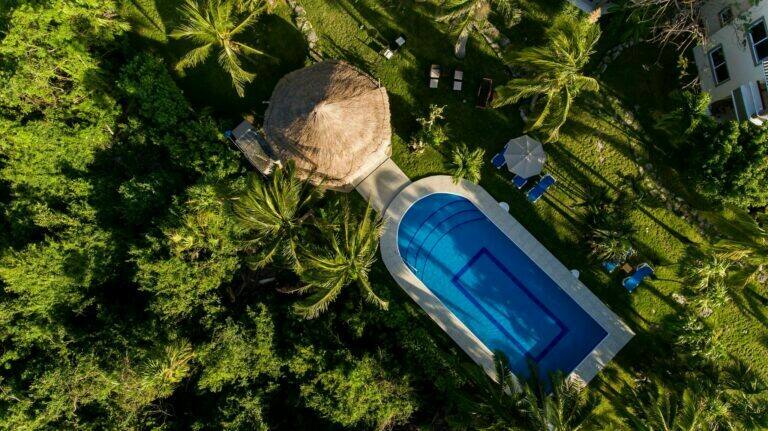
The layout is unusual: a single two-storey villa divided into three self-contained residences (The Penthouse upstairs, the Sun Suite and Angy Suite on the ground floor). Each has its own entrance, kitchen, and living spaces. For a couple, you book one suite and feel like you have the whole place. For a multi-generational family or a group of friends, you book all three and have dinner together in the shared outdoor kitchen without losing the privacy of separate bedrooms. It’s the only property in the area that solves that problem this elegantly.
The neighbouring Casa Angelica and Coco’s Villa — both managed by the same family — are good options if you need more bedrooms (eight total across the three properties) or want a smaller standalone property. They’re literally a hundred metres down the beach. The combined capacity is twenty guests, which makes them ideal for destination weddings and big family reunions.
When to come
The dry season runs from November to April. That’s the window when rain is unlikely, humidity is bearable, and the trade winds keep the air moving. December through March is the high season — book well in advance, especially for the holiday weeks and Easter.
May and October are the shoulder-season sweet spots. The weather is still mostly dry (occasional afternoon showers), the sargassum is less of an issue than the summer months, the crowds thin out, and the villa rates drop by fifteen to twenty percent. June and July are fine if you can handle the humidity. Late August and September are the months to avoid — peak heat, hurricane risk, and historically the worst sargassum landings.
Whatever you choose, give yourself at least five nights. Anything less and you’ll spend half the trip just settling in. A week is the sweet spot. Two weeks and you start understanding why people keep coming back.